Build a Clear Garden-Themed Word List
Choose familiar garden words with a clear boundary, consistent spelling and lengths that suit your puzzle grid.
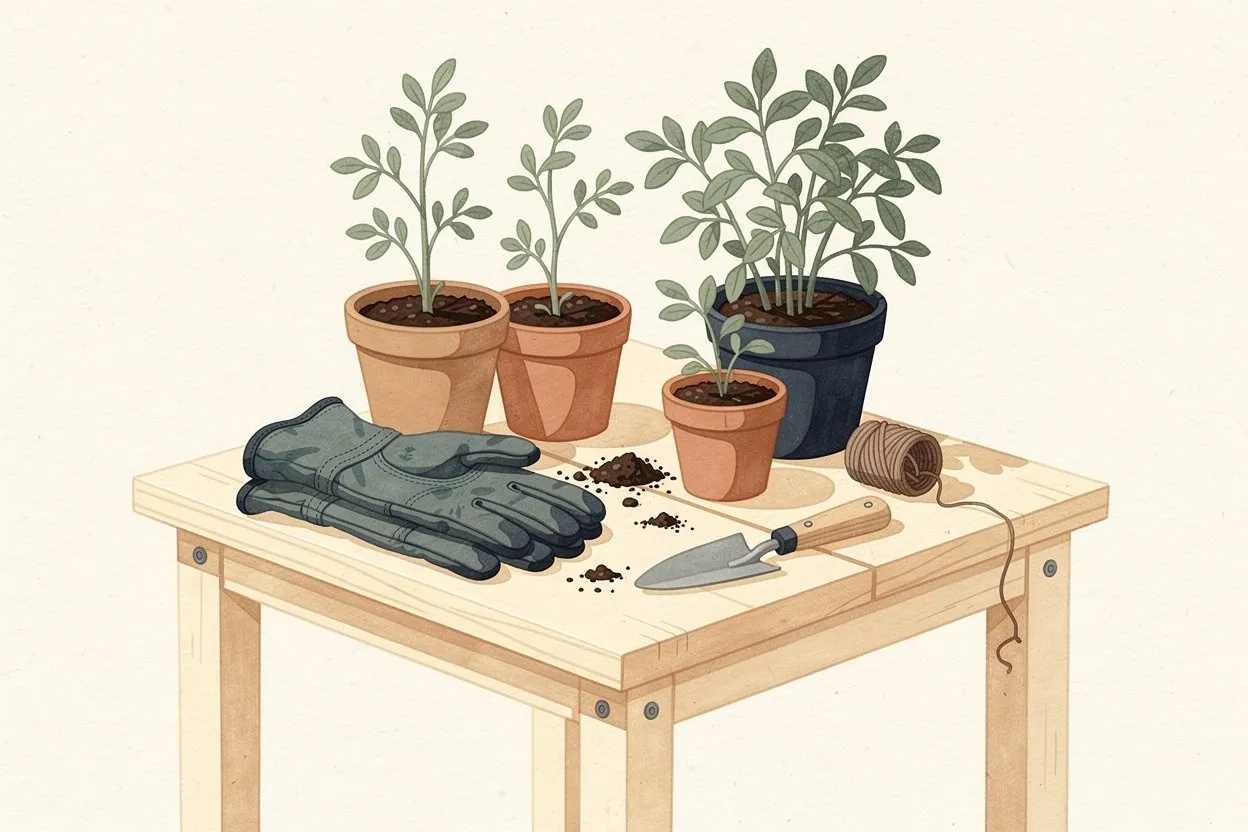
A garden theme can produce a clear, approachable word search when its boundaries are specific. “Everything outdoors” is broad enough to become an unrelated collection of words. A smaller theme, such as tools on a potting bench or things in a flower bed, gives the player a useful expectation. Begin with a short original list and test it in the puzzle maker before adding more entries.
Choose one part of the garden
Decide whether your list is about tools, plants, growing actions or features of a garden. Mixing all four can work, but a focused first puzzle is easier to explain. Give the theme a title that accurately describes what the list contains rather than promising a complete gardening vocabulary.
For a tool-focused example, you might begin with RAKE, SPADE, HOSE, POT and TROWEL. For a growing theme, SEED, ROOT, STEM, LEAF and BLOOM offer a different set. These examples are starting lists, not an authoritative glossary or a claim that every term has the same meaning in every context.
Keep spelling choices consistent
Choose the spelling variety you want to use and check every entry before generation. Decide whether the list uses singular nouns or allows plurals. A player should search for the exact displayed word, so a small inconsistency can make the target list less predictable even when the grid itself is valid.
Avoid including two forms of the same word merely to increase the count. LEAF and LEAVES may be a deliberate comparison in a language activity, but they can also feel repetitive in a short casual puzzle. Include both only when that choice supports the purpose of the theme.
Match the list to the grid
Check the longest word against the selected grid size and the directions allowed by the maker. A word that cannot fit in an available straight line needs a larger grid or a shorter replacement. Keep several word lengths in the list rather than filling it entirely with long entries.
Do not assume that removing spaces or punctuation preserves the experience you intended. If a tool normalizes an entry, inspect the displayed target list after generation. A multiword plant name may become awkward when joined together; a single clear noun is often a better choice for a first puzzle.
Review the generated result
After making the grid, read the final word list and check that every intended entry appears. If the maker rejects or omits a word, resolve that explicitly rather than treating the output as complete. Check the spelling and the tool’s limits, then revise the list or size as needed.
Play a few targets yourself in the word search game. This checks the practical readability of the puzzle, especially on a phone. The theme should help orient the player without requiring specialist gardening knowledge that the title did not announce.
Keep the purpose modest
A themed puzzle can be a pleasant way to notice and revisit words. It is not a gardening instruction sheet, a plant identification tool or a test of someone’s expertise. Keep any factual plant-care advice in a separately checked guide. For the puzzle itself, prioritize clear words, a manageable grid and an accurate description of what the player is being asked to find.